RENATA SALON GAZETTE · KNOWLEDGE ISSUE
Scalp Care
Do You Need a Scalp Serum, or Is Shampoo Enough?
On this page
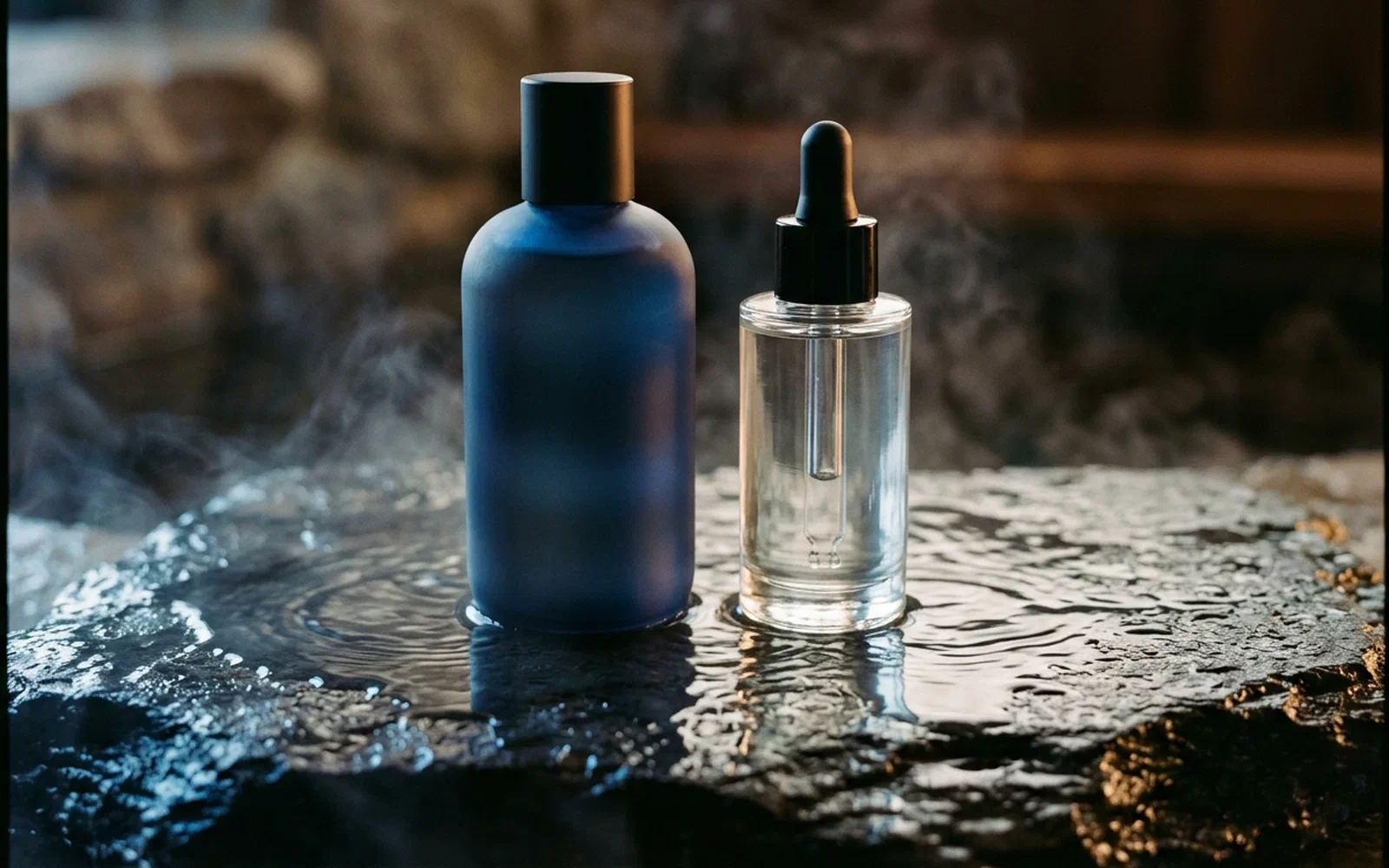
A third bottle can look like a more complete routine. It is not automatically a more useful one.
Shampoo and scalp serum are different formats. One is designed to be rinsed away; the other is designed to remain after application. That distinction tells you how to use them, but it does not establish that everyone needs both—or that longer contact guarantees a better result.
What is shampoo responsible for?
Shampoo is primarily a cleanser. Applied to the scalp, it helps remove excess oil, shed skin and product build-up before being rinsed away. The American Academy of Dermatology advises washing according to how oily or dirty the hair becomes and applying shampoo mainly to the scalp rather than unnecessarily working it through the full length (AAD: healthy hair tips).
That is a useful baseline: begin with adequate cleansing. A serum cannot compensate for a wash routine that does not suit your scalp and hair type.
What does “leave-on” actually tell you?
It tells you the intended method of use. A leave-on product is formulated and assessed to remain after application instead of being rinsed away immediately.
Malaysia’s cosmetic safety guidance treats duration of contact—including whether a product is rinse-off or leave-on—as one factor in safety assessment. Concentration, amount used, frequency, application site and foreseeable misuse also matter (NPRA: safety assessment guidance).
That is why dwell time should not be used as a shortcut for efficacy. A product that stays longer is simply a different exposure. Its benefit still has to be supported by the finished formula and evidence appropriate to the claim.
| Question | Rinse-off product | Leave-on product |
|---|---|---|
| What does the label require? | Apply, then rinse as directed | Apply and leave in as directed |
| Can it clean the scalp? | Shampoo can remove oil and build-up | It does not replace shampoo |
| Does contact time prove performance? | No | No |
| What should decide use? | Hair/scalp needs and pack directions | Relevant claim, ingredients, tolerance and pack directions |
| Can the formats be improvised? | Do not leave it on unless instructed | Do not assume it can be used like shampoo |
When is a scalp serum optional?
For many people, most of the time. If your scalp is comfortable, your wash routine is working and the serum does not address a clearly described concern, there is no evidence-based reason to add a step simply because the product category exists.
Before buying, ask three practical questions:
- What cosmetic concern does the label say it addresses?
- Which ingredients and finished-product evidence support that claim?
- Are the directions realistic enough that you will use it consistently?
NPRA requires cosmetic benefits to be supported by substantial evidence or by the formulation itself, and claims must remain cosmetic rather than medicinal (NPRA: Guidelines for Control of Cosmetic Products in Malaysia).
Can a serum replace washing after exercise?
No. If sweat, oil and residue need to be removed, cleansing is the relevant step. The AAD’s practical rule is to shampoo according to how oily or dirty the hair becomes—not according to a fixed universal schedule (AAD: healthy hair tips).
After washing, use a scalp leave-on only according to its own directions. Avoid assuming that every serum belongs on damp hair, under a dryer or at a fixed daily frequency; those instructions belong to the finished product.
What should make you stop experimenting?
Stop using a product if it causes burning, persistent itching or visible irritation. Redness, pain, crusting, marked scaling or unusual shedding should not be managed by layering more cosmetics. Those signs merit assessment by a healthcare professional.
Conclusion: choose by purpose, not by the number of steps
Shampoo cleans. A scalp serum remains after application. Neither fact makes a serum universally necessary, and longer contact is not proof of a better outcome. Begin with the concern, check the label and evidence, and follow the finished product’s directions.
Sources and further reading
Salon Authority · Q&A
Common questions
Do I need a scalp serum as well as shampoo?
Can a scalp serum replace shampoo after sweating?
Does a leave-on work better because it stays longer?
Can I leave a rinse-off product on my scalp?
Will every scalp serum suit an oily or sensitive scalp?
Should scalp serum go on before or after drying?
Related reading
 Scalp Care
How Often Should You Wash Your Hair in Malaysia?
There is no universal wash schedule for Malaysia’s heat and humidity. Use scalp oil, sweat, hair type and …
 Scalp Care
Plant Vesicles and Exosomes in Haircare: What Do the Terms Mean?
Plant vesicle, nanovesicle and exosome are not interchangeable proof of performance. Learn why researchers …
 Scalp Care
How Much Daily Hair Shedding Is Normal?
Shedding 50–100 hairs a day is commonly considered normal, but counting is imprecise. Learn what trends matter …