
RENATA SALON GAZETTE · KNOWLEDGE ISSUE
Scalp Care
How Often Should You Wash Your Hair in Malaysia?
On this page
Malaysia changes how quickly a scalp feels ready for another wash. It does not create one correct schedule for everyone.
The useful rule is simpler: wash according to how oily or dirty your scalp becomes, then adjust for hair texture, chemical treatment and comfort.
Is daily shampooing reasonable in a humid climate?
It can be. The American Academy of Dermatology notes that people with straight hair and an oily scalp may want to shampoo daily, while dry, curly, coarse or textured hair often needs less frequent washing (AAD: healthy hair tips).
Heat, commuting and exercise may make your scalp feel oily or dirty sooner. That supports washing when needed; it does not prove that everyone in Malaysia should wash once—or twice—each day.
What should determine a second wash?
Ask what happened after the first one. Heavy exercise, a long outdoor shift or substantial product build-up may justify shampooing again. A short trip from home to an air-conditioned office may not.
If you wash again, choose a gentle cleanser, keep the water comfortable rather than very hot and concentrate shampoo on the scalp. Watch the result: tightness, burning, persistent itch or increasing breakage means the routine needs reassessment.
| Situation | Reasonable response |
|---|---|
| Scalp feels comfortable and clean | No extra wash is required |
| Light perspiration without product build-up | A rinse may be sufficient if it feels comfortable |
| Heavy sweat, oil or styling residue | Shampoo the scalp with a suitable cleanser |
| Scalp becomes tight or irritated after frequent washing | Reduce cleansing strength or frequency and reassess |
| Persistent redness, marked scale, pain or unusual shedding | Seek professional assessment |
How can you reduce friction when washing often?
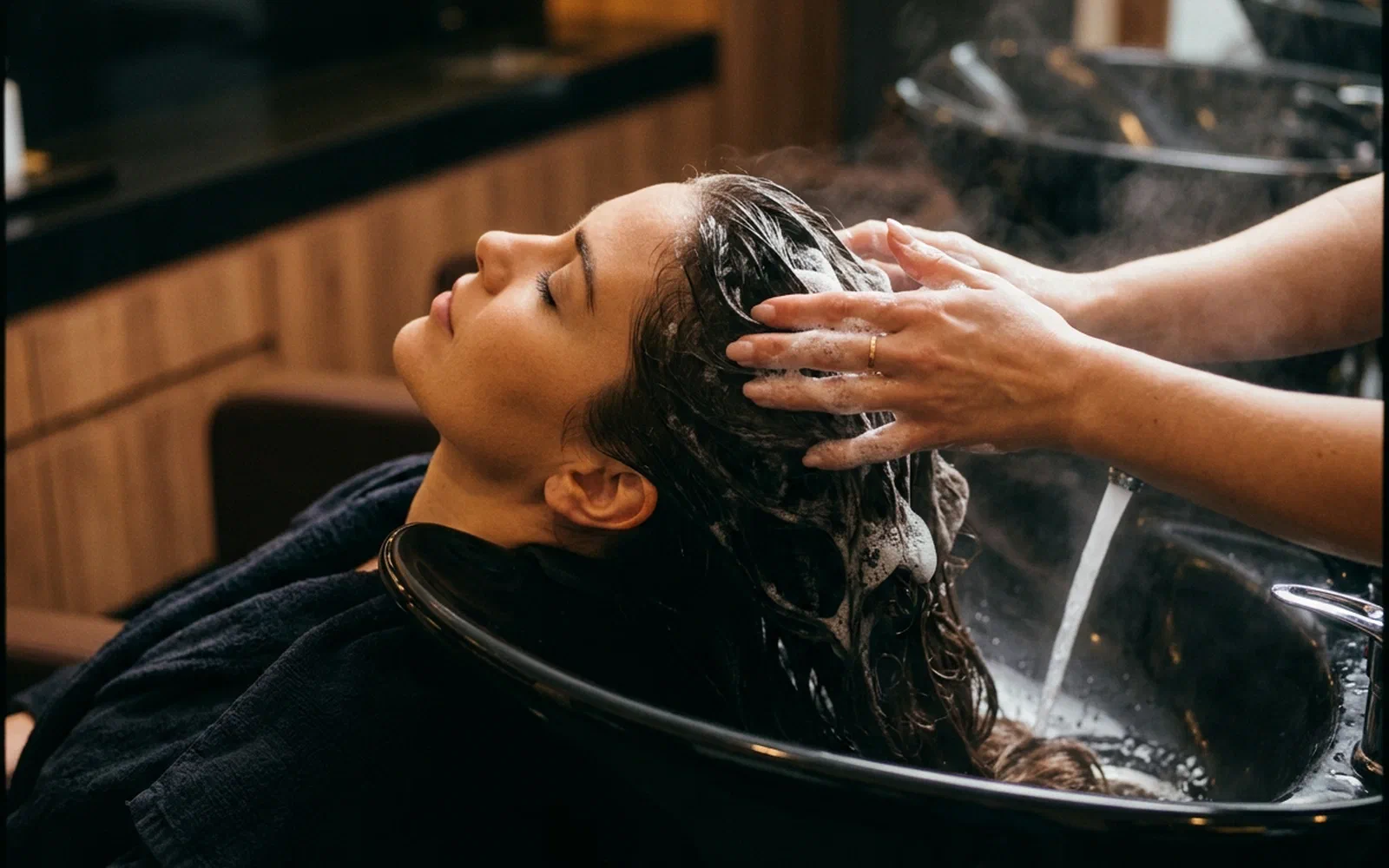
Apply shampoo mainly to the scalp instead of scrubbing the entire length. Follow with conditioner where your hair type needs it, detangle gently and absorb water by pressing with a towel rather than rubbing. The AAD also recommends limiting excessive heat and using low or medium settings when blow-drying (AAD: healthy hair tips).
These habits matter more than forcing your routine to match a fixed number.
What changes with helmets and covered hair?
The practical issue is retained sweat and moisture. Allow the scalp and hair to dry before covering them again where possible, and clean any washable liner that repeatedly contacts the scalp. Avoid diagnosing persistent symptoms as “humidity”; redness, pain, crusting or ongoing scale can have other causes.
Conclusion: let condition decide frequency
Daily washing can be reasonable in Malaysia, and a second wash can sometimes be useful. Neither is compulsory. Cleanse when the scalp is oily or dirty, use a method suited to your hair type, and adjust when the routine produces discomfort.
Sources and further reading
Salon Authority · Q&A
Common questions
Is it bad to wash my hair every day in Malaysia?
Can I wash twice a day after commuting or exercise?
Is water alone enough after sweating?
Should I shampoo the full length of my hair?
Does a helmet or head covering change the routine?
Must I dry my roots completely before bed?
Related reading
 Scalp Care
Do You Need a Scalp Serum, or Is Shampoo Enough?
Shampoo and scalp serum are different product formats, not steps everyone needs. Learn what rinse-off and …
 Scalp Care
Plant Vesicles and Exosomes in Haircare: What Do the Terms Mean?
Plant vesicle, nanovesicle and exosome are not interchangeable proof of performance. Learn why researchers …
 Scalp Care
How Much Daily Hair Shedding Is Normal?
Shedding 50–100 hairs a day is commonly considered normal, but counting is imprecise. Learn what trends matter …