RENATA SALON GAZETTE · KNOWLEDGE ISSUE
Colour Care
Purple Shampoo in Malaysia: How It Works, When It's Not Enough, and What to Use Instead
Under a KL condo’s bathroom light, the yellow in your ends is impossible to un-see, and purple shampoo can pull it back in tonight’s wash. What it cannot do is fix a fade that isn’t yellow. Both halves matter: dwell times, Malaysian shelf prices, and the point where violet stops being the answer.
What does purple shampoo actually do to hair?
Purple shampoo does not bleach, lift, or dye anything. It runs on colour theory: violet sits directly opposite yellow on the colour wheel, so a small amount of violet pigment on hair that is turning yellow makes the two visually cancel. Under office lighting, that reads as the difference between a clean ash and an obvious brass, though nothing about the strand itself has changed. Which is why the effect rinses away and needs topping up: it is an optical correction sitting on the hair’s surface, not a chemical change to the strand.
That distinction decides what purple shampoo can and cannot fix. It corrects a colour cast — the yellow that bleached, lightened, blonde or grey hair develops as the base pigment shows through, or as sun and pool water push the tone warmer. It was never built to add colour, and it has nothing to offer hair that has faded in some other direction.
How long should you leave purple shampoo in, and how often?
Roughly 1–3 minutes on warmer, darker-blonde tones, 3–5 minutes on neutral blondes, and 5–15 minutes on very light, cool tones like platinum or silver-grey, where more violet is needed to counter more yellow. Lightness sets the clock: the paler the hair, the more violet it takes. Those ranges come from a Malaysian review of the category (beautyinsider.my), which also put shelf prices at roughly RM36–RM121 as of 2023 — a useful sense of the spread, though worth rechecking against current Watsons and Guardian pricing.
Hold both numbers side by side: a KL salon colour service runs about RM159–390, which makes a colour-depositing shampoo upkeep between those visits, not a replacement for them.
Frequency runs on the same logic. The lighter and more yellow-prone the hair, the more often purple shampoo earns its place in the routine, which for many people is once or twice a week rather than every wash. Reaching for it at every wash on hair that isn’t especially light is the shortest route to the next problem.
What happens if you leave it on too long? (over-toning)
Over-toning is violet going past cancelling yellow and starting to tint the hair itself lilac, grey, or flat. It shows up fastest on very light or porous hair, where pigment absorbs almost on contact, and it gets worse with longer dwell times, more frequent use, or a rushed rinse. The fix is unglamorous and reliable: a few washes with a plain clarifying shampoo lift the excess violet out. Going forward, a shorter dwell time and a longer gap between uses settles it for good.
Where can you buy purple shampoo in Malaysia?
Easily, and in more places than most people expect. Watsons and Guardian both stock it, Watsons under its own house brand, and Fanola’s well-known No Yellow line is distributed locally alongside a long tail of Shopee and Lazada resellers. Korean brand Kundal has an established following here too. Look past violet and the multi-shade options are already on Shopee MY — ANAZE Colure among them — in pink, orange, peach, coral, silver, grey and red wine.
What almost nobody explains on the shelf is which pigment fixes which fade. That is the rest of this page.
| Shampoo type | Pigment | Corrects | Does not fix |
|---|---|---|---|
| Purple | Violet | Yellow / brassy cast on blonde, grey or lightened hair | Faded pink, ash-violet, brown, red, or any non-yellow fade |
| Blue | Blue | Orange / brassy cast on brown or “bronde” hair | Yellow tones, faded fashion colours |
| Toning / colour-depositing | Matched to shade — violet, ash, brown, pink, coral and more | Whatever colour family it’s matched to — replenishes a fading fashion or toned colour | Virgin, never-lightened hair — there’s little for the pigment to hold onto |
Why doesn’t purple shampoo fix faded pink, ash or brown hair?
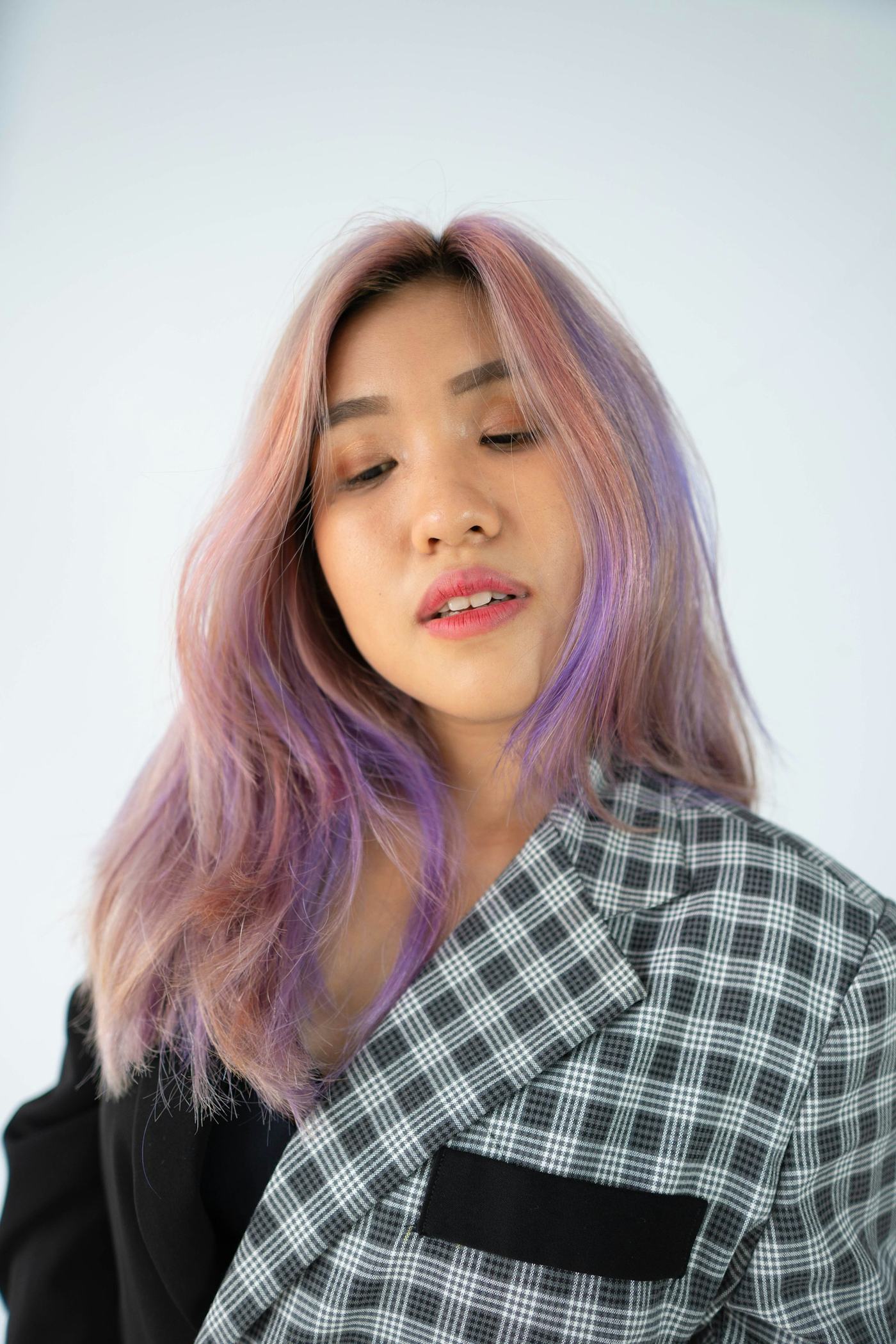
Because it was never built to. Violet cancels yellow and nothing else; it has no mechanism for correcting a faded rose-gold, a warming ash-grey, or a brown that has gone brassy in a different direction. Reach for purple on any of those and the best case is that nothing happens. The worse case is a muddy, greyish film sitting on top of the fade you were trying to fix.
Toning shampoo
Matching the fix to the colour you actually have, rather than reaching for whichever bottle is loudest on the shelf, is simply the more honest way to solve this. The fix for a faded non-yellow shade is pigment from the same colour family you’re trying to hold onto: a coffee-brown deposit for coffee tones, a lilac-pink deposit for pink tones. That is the entire premise of a multi-shade colour-depositing shampoo. One pigment solves one problem; a shade wall lets you match the deposit to whatever your colour actually is. You can see how that works, shade by shade, on the Rock Colour Shampoo range — it is not a hair dye and it does not cover grey hair, it tops up a colour you already have.
Is a multi-shade colour-depositing shampoo the same as “toning shampoo”?
Close enough that people use the terms interchangeably, and there is still a real difference. “Toning shampoo” is the umbrella term: any shampoo that deposits pigment to hold or correct a tone. Most bottles sold under that name ship in a single shade, usually violet, which makes them a purple shampoo with a broader-sounding label. A multi-shade colour-depositing shampoo gives you the whole shade wall instead, so the pigment can be matched to the colour you actually have: brown, ash, pink, coral. That matters more here than it might elsewhere, because Malaysian heads run far more brunette and ash-grey than the platinum-blonde market purple shampoo was originally built for.
Fading isn’t only a “which shampoo” question, either. Chlorine, sun, hot water and wash frequency all pull colour out of hair whichever toning product you use, and the fuller picture, with a myth or two worth correcting, is in why hair colour fades so fast in Malaysia.
The short version
Purple shampoo is a narrow, useful tool for one specific problem: yellowing in bleached, blonde or grey hair. At the right dwell time and frequency it does that job well and won’t damage hair beyond the drying effect of washing more often. On the wrong shade, or left on too long, it either does nothing or over-tones. If your colour has faded outside the yellow range, the answer isn’t a stronger purple shampoo — it’s pigment from the right colour family.
Not sure which family your fade belongs to? Take the 3-Question Shade Quiz →, then look at your ends in daylight with no filter: yellow wants violet, orange wants blue, and a colour that has only gone flat wants the same family topped back up.
Salon Authority · Q&A
Common questions
Can I use purple shampoo on brown or red hair?
Why did my hair turn purple, grey or dull after using purple shampoo?
Is purple shampoo the same thing as toning shampoo?
Where can I actually buy purple shampoo in Malaysia?
Does purple shampoo damage hair?
Related reading
 Colour Care
Ash Grey Gone Orange: Why the Purple Bottle Made It Worse
Balayage or milk-tea brown turning copper-orange in KL, and purple shampoo only making it duller. Why dark …
 Colour Care
Why Does Hair Colour Fade So Fast in Malaysia? The 6 Real Causes (and 2 Myths)
The real reasons dyed and bleached hair fades quickly in Malaysia's climate — sulfates, UV, hot water, wash …
 Scalp Care
How Often Should You Wash Your Hair in Malaysia?
There is no universal wash schedule for Malaysia’s heat and humidity. Use scalp oil, sweat, hair type and …